Latest News

Posted on Tuesday 10th April 2012
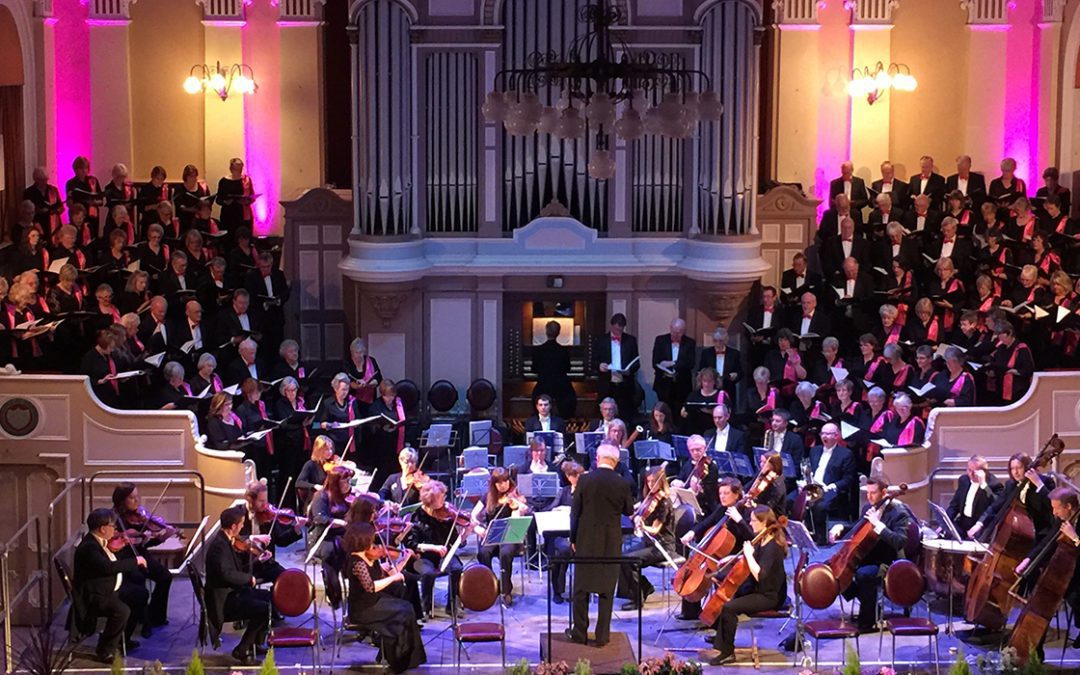
PASSION AND PROTEST - BIRMINGHAM POST AND KIDDERMINSTER SHUTTLE REVIEWS OF THE CONCERT

We were very pleased that Christopher Morley, of the Birmingham Post, was able to review the concert, and his write-up can be found here.

William Tomaney, from the Kidderminster Shuttle, also reviewed the concert, and his report can be viewed here.

Posted on Friday 10th February 2012
KODÁLY AND TIPPETT

We are grateful to Jane Handley for these notes of the talk given by Geoffrey Weaver on Tuesday 31st January

PSALMUS HUNGARICUS   Zoltán Kodály  1882 - 1967

Kodály had a strong sense of pride in his country.  Together with Bela Bartok he had travelled throughout Hungary collecting folk songs and possessed a strong sense of national identity with his homeland.

Psalmus Hungaricus was written in 1923 on the 50th anniversary of the union of Buda and Pest and was a passionate protest against the dismemberment of Hungary following WW1 when Hungary lost both Slovakia and Transylvania.  The piece expresses his anger at this event. The text is a sixteenth century free translation of Psalm 55 by the poet Michael Veg.

There are 3 main themes which all emerge in the first 18 pages.  The main theme appears on page 3, “When as King David sore was afflicted” this theme is repeated throughout the work on pages 7 and 32. It is folksong like in character, it is the key theme which unifies the work, the repeated rhythm appears again on page 23 where it is altered to express Kodály’s anger.

The sighing, lamenting figure of the second theme appears on pages 11 and 14 in both orchestra and voice and in the tenor solo, page 9

The third theme, that of longing, is in the orchestra in the opening passage and again on page 17 where we hear the sighing effect within the orchestration.

The first section is very turbulent. The middle section is much calmer with Psalm 46 “So in Jehovah I will put my trust” appearing firstly in the orchestra and then taken up by the choir.

This is followed by a section reflecting violence, suffering and uncertainty in the music.

In the final section the music changes from warmth at “as for the righteous” to another angular outburst “those that are mighty” before the music subsides and the opening theme is recalled.

A CHILD OF OUR TIME   Michael Tippett   1905 – 1998

The depression of the 1920s and the rise of Nazism in the 30s gave Tippett a profound social and political awareness. He joined the Communist party for a time but left when he failed to convert his local branch to Trotskyism.

He wanted to use his art to express solidarity with the oppressed and in 1938 he heard the story of a Polish student, Herschel Grynsban, living in Paris, who had heard from his father of the persecution of his family and of the Jews in general by the Nazis back home in Poland. Grynsban’s response was to go out and kill a Nazi diplomat in Paris.

This resulted in the savage outbreak of violence against the Jews across Europe which began on “Kristallnacht”

Tippett resolved to write a work of protest. He asked his friend T S Eliot to write the libretto, but Eliot suggested Tippett write his own libretto, partly because Tippett already had a good idea of the shape of the work and partly because Eliot feared that his libretto might overwhelm the music!

Tippett wrote his own libretto taking as his model the Bach Passions and to some extent Handel’s “Messiah” using the baroque device of recitative and, in place of chorales, negro spirituals. Another influence was the film “Green Pastures” where “de Lawd looks down from heaven”. That film may also have prompted him in his decision to use spirituals.

The negro spirituals are the emotional heart of the piece, they come out of great tribulation, the negro slaves are forced to the knees to cry out.

Part 1

This deals with oppression in the world. All is confusion as the people sing “We are lost” the music is almost atonal. In chorus 5 the music has a ‘slithery’ effect - people cannot get a grip on life. The tenor sings of the plight of the poor, the soprano soloist in anguish sings “How shall I feed my children?” a lament that is tragically relevant to our times for mothers in the Horn of Africa. The section ends with the comfort of the spiritual “Steal away to Jesus”

Part 2

In No. 9 we are introduced to “the man” the child of our time, Grynsban. But before the assassination there is the persecution which led Grynsban to despair and violence. In No. 11 there are hints of some of the “Crucify” choruses in the St Matthew Passion and, in chorus 13, a clear reference to ethnic cleansing.  The boy is driven to shoot a representative of the oppressors. Chorus 19 is very violent and angular “break them in pieces on the wheel”. This is followed by No. 21 A Spiritual of Anger: “Let my people go”, the archetypal song of protest ending with the powerful “Go down Moses”

Part 3

Reflects on how release and liberation might come p.78 “the jewel of great price lies in the icy waters”. p.87 “winter cold means inner warmth”. The secret is hidden and people are impatient p.88. The message seems to be that wholeness and peace will come, but as Eliot says “the meaning is in the waiting”. In the final ensemble No. 29, the soloists sing of longing for wholeness and the hope that is there in the moving waters and “it is Spring” a contrast with the winter of the opening. After the choir the soloists embark on an ecstatic section and “Deep river” brings a measure of the wholeness and peace which are the hope and goal of all humanity.

Based on notes taken at the talk on 31st January together with original material supplied by Geoffrey Weaver.

Any errors are those of the scribe.

Posted on Friday 2nd September 2011
WYRE FOREST YOUNG VOICES - PROGRAMME FOR 2011-2012

Wyre Forest Young Voices have another full programme for the coming year. They will take part in the Gala Christmas Concert on December 17, and the KCS Concert "Crown Imperial" on July 14, and will also present their own concerts in November and March - full details can be viewed on our "Programme" pages.

Younger members of the choir will have a chance to shine, in their "At Home" concert on October 16, and older members will take part in the annual "Graduates' Weekend" early in January, when they and former members of the choir will come together for two days' singing and fun, culminating in a concert at Baxter Church Hall.

On July 7 the choir will sing in Great Witley Church, and the concert will be followed by an "end of year" party at Little Witley Village Hall, to which all are invited, and later in July the choir will travel to Derbyshire for a concert tour lasting five days, of which further details later.


Posted on Monday 22nd August 2011
WYRE FOREST YOUNG VOICES' VISIT TO GERMANY

The Wyre Forest Young Voices visited Ulm, in Germany, for a week in July, to meet up with the Spatzenchor which is based in the Cathedral there. They travelled by train, and their journey was not entirely straightforward, but, once there, they had a great time, singing in four concerts (to packed audiences) and enjoying outings and parties. A local newspaper covered the concert with the Spatzenchor, and printed the somewhat unflattering picture shown below. Here is what they said:

GEOFF WEAVER CONDUCTS HIS WYRE FOREST YOUNG VOICES AS ENERGETICALLY AS A POP STAR.

THE ART OF SINGING IN TWO STYLES

The youth choirs of the Spatzen (sparrows) and the Wyre Forest Young Voices win the hearts of the people of Ulm.

The Ulm Sparrows and the WFYV from Kidderminster caused a sensation in the full music-school hall.

Where from? Kidderminster? Whoever 'Googles' will of course find the home of the WFYV in Kidderminster. The town of 55,000 inhabitants lies in central England in the Wyre Forest district of the County of Worcestershire, 25 Kilometers South West of Birmingham. Last year the Ulmer Spatzen visited Kidderminster, among other places, on their tour of England. Cathy Dew, who is married to an 'Ulmer' had organised everything. Now the English choir is visiting Ulm. At the combined concert the audience was so numerous, that the hall of the Music School ran out of chairs.

After entering to the moving melody of the Hebrew song 'Haasina Elohim', the Spatzen youth choir performed the first half of the concert under the direction of their conductor, Hans de Gilde. In works from Bach to John Rutter, the Sparrows sought to overwhelm the audience singing a capella or with Barbara Comes on the piano; there were also solos by 15-year-olds Franziska de Gilde and Theresa Mack.

The choirs then combined to display the most beautiful choral art in a piece from Pergolesi's Stabat Mater and Bob Chilcott's moving work Can you hear me? with silent sign language: 80 shining voices giving us goose pimples. Hans de Gilde changed places with Geoff Weaver, who despite his advancing years, was as energetic as a pop star, and his introductions were given with typical English humour. A capella or with Mike Elden on the piano, his 40 teenagers overwhelmed us in a variety of styles, with soloists Nicole  Stone's bell-like voice in Brahms' Standchen and the heartfelt entreaties of the baritone [Dominic Lee].

Despite the 20 hours travelling, the English guests were on top form. They came by bus from Kidderminster to London, by train through the Channel Tunnel to Brussels, on to Cologne, then on to Ulm – with some delays, as Canon Rob Jones the Chairman of the choir later explained. Not until very late on Saturday evening did the 10 to 18 year olds arrive. They are lodging at the Brauer Internat on Kuhberg.

Their eight-day tour through the region has taken them to Illertissen. In the college of the 'School Brothers', they took part in a concert yesterday with the Illertissen Chorkids. Today at 12 00, they are performing in Ulm Cathedral. After that they will be received by the Minister of Culture, Sabine Mayer-Dolle in the town hall. Before their last concert in Aalen the English people will spend 2 days holiday in the Liechtenstein resort.

To complete their concert the musical ambassadors sang Coleman’s Rhythm of Life, as a rousing encore saying “Farewell” to an appreciative audience.

(translated by Pauline Powell)

Posted on Friday 4th March 2011
Programme for 2011-2012

The programme for the 2011-12 Season is as follows:

October 13 - Annual General Meeting

November 18 - Concert by Wyre Forest Young Voices and Primary Chords - Kidderminster Town Hall, 7.00 pm.

November 25, 2011 - KCS Concert - Town Hall, 7.30 pm. Programme: J Haydn - Missa in Tempore Belli (Mass in Time of War); CPE Bach - Magnificat (Note that this programme has changed since being first announced in May 2011)

December 17 - Gala Christmas Concert - Kidderminster Town Hall, 7.00 pm.

January 31, 2012 - Talk by Geoff Weaver: "Tippett and Kodály - Passion and Protest" - Baxter Church Hall, 7.30 pm.

March 9 - Annual Dinner at La Brasserie, Kidderminster

March 23 - Concert by Wyre Forest Young Voices and Primary Chords - Kidderminster Town Hall, 7.00 pm.

March 31 - KCS Concert - Town Hall, 7.30 pm. Programme: Michael Tippett - A Child of our Time; Zoltán Kodály - Psalmus Hungaricus.

April 28 - Choir Away Day at Knighton

June 30 - Primary Chords 10th Anniversary Concert and Picnic at Greyfields Court, Kinver

July 7 - Wyre Forest Young Voices Concert at Great Witley Church

July 14 - KCS Concert - "Crown Imperial", to celebrate HM the Queen's Diamond Jubilee - Kidderminster Town Hall, 7.30 pm.

Further details of programmes and ticket prices will be published as they become available.

Posted on Saturday 30th October 2010
Our Chairman

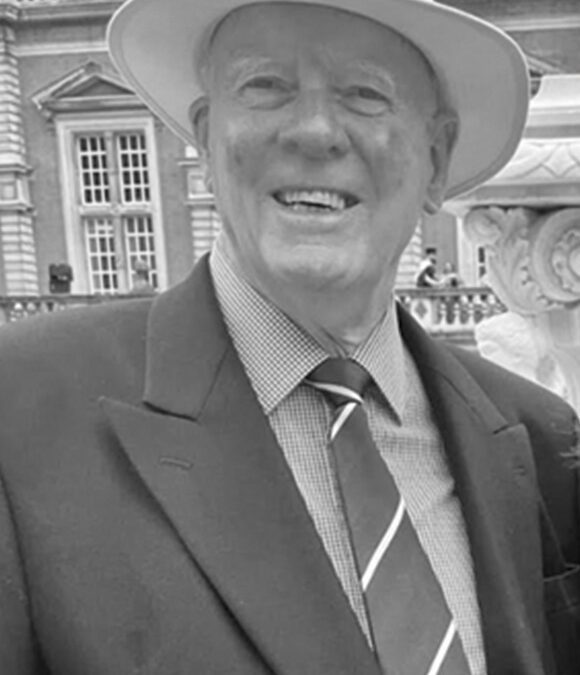
Canon Rob Jones

Our Chairman is Canon Rob Jones, who has been a member of the Society since 1980, when he came to work in Kidderminster as curate at St. John's and Holy Innocents. He says that the late, redoubtable Peg Jordan was one of the people instrumental in getting him to join - in fact the way she put it he doesn’t think he had much choice, and he’s always been grateful to her for that.

Moves for work have kept Rob within reach of KCS; he moved firstly to Dudley and then to Worcester, where he is now working for the Diocese of Worcester in the training and development of clergy and lay ministry across Worcestershire and Dudley.

He started off in the back row of the basses, and has stayed there, where there is a good tradition of chairmen skulking!

You can read older news in our archives.

PASSION AND PROTEST - BIRMINGHAM POST AND KIDDERMINSTER SHUTTLE REVIEWS OF THE CONCERT

KODÁLY AND TIPPETT

WYRE FOREST YOUNG VOICES - PROGRAMME FOR 2011-2012

WYRE FOREST YOUNG VOICES' VISIT TO GERMANY

Programme for 2011-2012

Events 2012

News 2012